Tony Silvera
Night TrainTony Silvera is a homicide detective who has worked many cases alongside Mike Hoolihan. In the investigation into Jennifer Rockwell’s death, he is both a familiar presence at the scene and a practical partner in examining evidence that does not fit neatly together. His blunt attention to the case’s inconsistencies is balanced by a refusal to let its puzzling details displace the dead woman herself.
Identity and Introduction
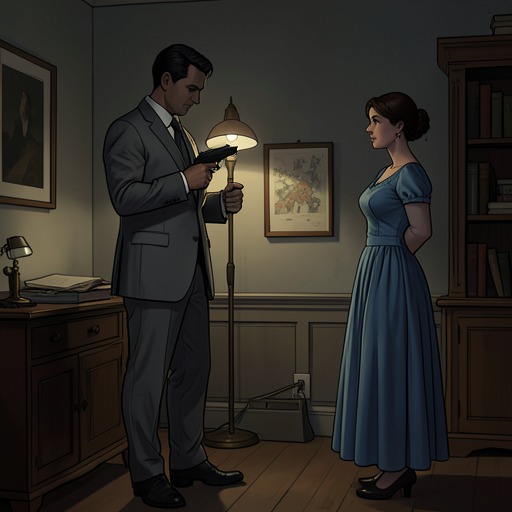
Silvera meets Mike Hoolihan at the door of Jennifer’s apartment, where the two detectives have once again found themselves together in a stricken home. They have stood side by side in many such places, but this one is different. The brief exchange at the threshold conveys their shared familiarity without making the scene routine: Silvera greets Mike with dismay, and Mike immediately asks where Jennifer is.
The apartment scene is set amid an extensive police response. Uniformed officers, the science crew, and medical examiners are present, and Silvera is inside. The investigation belongs to a professional world he and Mike know well, but Jennifer’s death brings their work into an unusually personal register.
Working the Case
On March 9, Mike meets Silvera after the detectives have been working the phones. Silvera says he hates the whole situation. His reaction is not developed into a separate explanation; it registers the strain of a case in which familiar procedures and an apparently comprehensible personal story have not settled what happened.
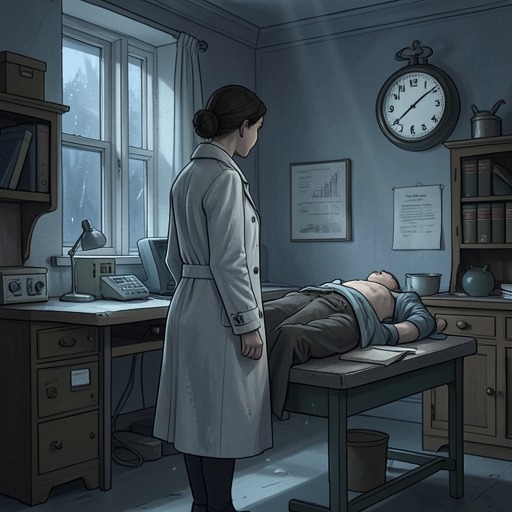
Silvera points to a discrepancy in the bullet evidence. When Paulie No fluoroscoped Jennifer, the examination showed three bullets: one remained in her head, one was in Evidence Control, and one had been dug out of the wall at the scene. After the autopsy, the detectives returned to the scene. They found only one hole in the wall, then dug out another round. The resulting puzzle is two bullets from one hole, alongside the bullet in Jennifer’s head. Silvera calls attention to the mismatch, but the account does not show him claiming that it proves a particular explanation.
The anomaly does not, by itself, make Silvera treat ballistics as conclusive. Mike observes that police are generally blasé about ballistics and says he has seen two bullets in suicides and can imagine three. Their exchange places the strange count inside the practical uncertainty of the investigation: a troubling detail demands attention, but it is not automatically an answer.
Jennifer, Trader, and the Limits of the Story
Silvera and Mike also call people likely to have opinions about Jennifer and Trader Faulkner as a couple. The accounts they gather converge on a sentimental picture of a pair who seemed made for one another. More significantly for the inquiry, nobody they contact knows of prior gunplay: as far as anyone knows, Trader had never raised his voice to Jennifer, much less struck her. The interviews give the detectives no reported history of violence to support an easy suspicion of him.
That portrait does not explain why Jennifer died, and Silvera does not treat it as a solution. When Mike asks why Jennifer was found nude, invoking Colonel Tom’s description of her as modest and his assertion that she never even owned a bikini, Silvera answers in effect that her death matters more than her nudity. The response redirects the investigation from the striking circumstance of how she was found to the irreducible fact that she is dead.
Narrative Role
Silvera’s role is grounded in partnership: he shares casework with Mike, brings the bullet discrepancy into focus, and helps gather outside impressions of Jennifer and Trader. The evidence does not supply a personal history or a resolved theory of his own. Instead, it presents him through the pressures of homicide work—familiar procedure, details that resist a tidy account, and a colleague’s insistence that the investigation remain answerable to the person at its center.